By Shelli McNutt
When Mary Leonard steps into her classroom at Harvest Missionaries College (HMC) in Ewaso Ng’iro, Kenya, she brings with her a deep love for people, a passion for language, and a curriculum that seamlessly weaves faith and literacy together—Light of the World Learning.
Mary’s journey into English language instruction began long before Kenya. Born in Zambia and later raised in several parts of the United States, Mary developed an early appreciation for cross-cultural relationships. While attending Lincoln Christian College, she earned a degree in Bi-vocational Missions with an emphasis in Urban Ministry and ESL, discovering along the way how powerful language learning can be when paired with genuine relationships and the gospel.
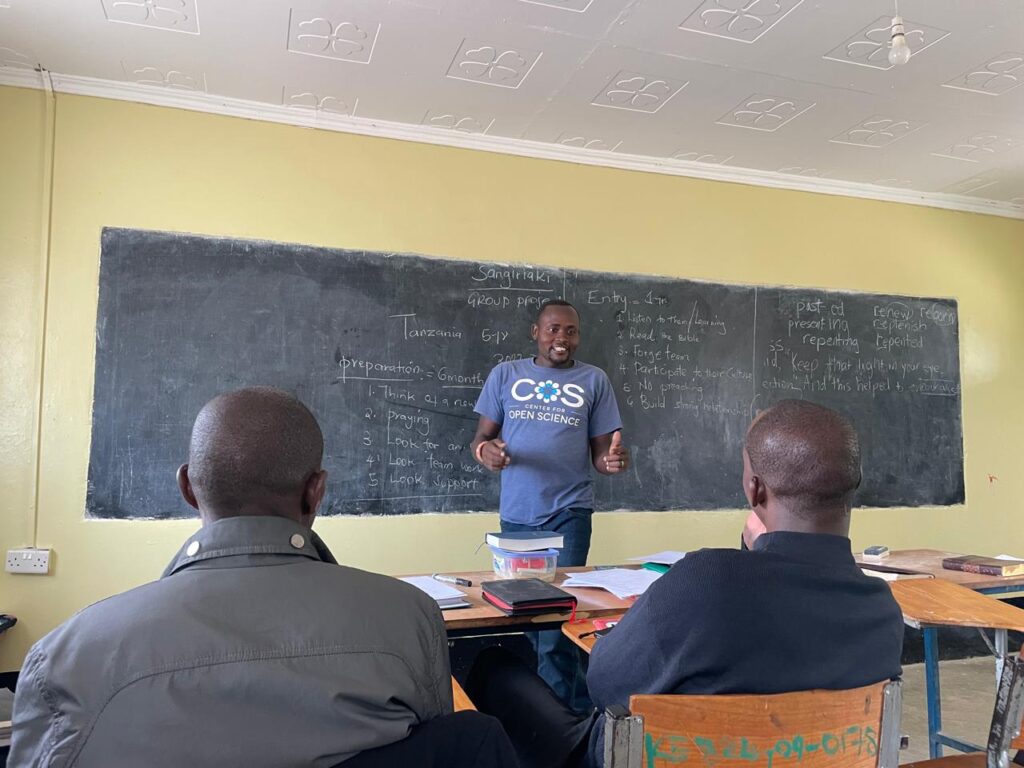
That passion has now found a home at HMC, where Mary teaches English to adult learners—primarily Maasai pastors and missionaries—many of whom are preparing for ministry both within Kenya and beyond. When Mary joined HMC, the college was already using the Light of the World Learning curriculum, and she quickly embraced it as a natural fit for her students and setting. The students come from various parts of Maasai land. They are all husbands, fathers, herders, gardeners, and often have another job as well, such as fixing motorcycles or selling items in town.
Mary shares that the curriculum builds English skills through scripture her students already know deeply. Because her students are pastors with a strong biblical foundation, using the Bible as the primary text removes barriers and builds confidence. Familiar stories allow students to focus on language acquisition rather than content comprehension, making progress both attainable and encouraging.
Mary uses LOTWL as the backbone of her intensive ESL classes, rotating students through lessons, Bible reading, writing practice, conversation, and even children’s books. The curriculum’s flexibility allows her to adapt lessons to fit local realities—such as differing naming customs, the absence of formal birthdates, and the use of Kenyan English—while still maintaining a clear, structured path for literacy growth. Cost-effectiveness is another key benefit. Since the materials are given freely to download, Mary can print and bind student books locally for just a few dollars.
The impact has been tangible. Students who once struggled to read or write are gaining confidence, accessing Scripture in new ways, and meeting government education requirements. Beyond the classroom, English literacy is opening doors—allowing students to communicate across tribal lines, support their children’s education, and prepare for ministry opportunities that would otherwise be out of reach.
Mary shares a success story, “One student in particular had to leave school in fourth grade. Now because of ESL classes, he is growing in his ability to read and write in English and Swahili. Since English, Maa and Swahili share an alphabet, he is strengthening his skills every time he writes. He is catching up on some of the academic skills that he missed as a child and is becoming more literate in each language as he reads the Bible in all three languages, attends other classes taught in Swahili, and is doing more reading and writing in both English and Swahili.”
For Mary, the joy is found in watching her students’ faces light up when they realize they can communicate something in English that they previously couldn’t. “It is such a gift to watch my students learn and grow in their English abilities!” she says.
As she looks ahead, Mary hopes to train more teachers using the LOTWL English course, expand the campus library, and bring English classes to new settings—including local communities and staff where she lives in Nairobi. Through it all, Light of the World Learning remains a trusted partner in her mission.
By combining language, Scripture, and cultural sensitivity, Mary Leonard is helping light the way—one lesson, one student, and one community at a time.